
Why Small States Require Different Development Models
Smallness should shape the design of development, not become an excuse for weak outcomes.
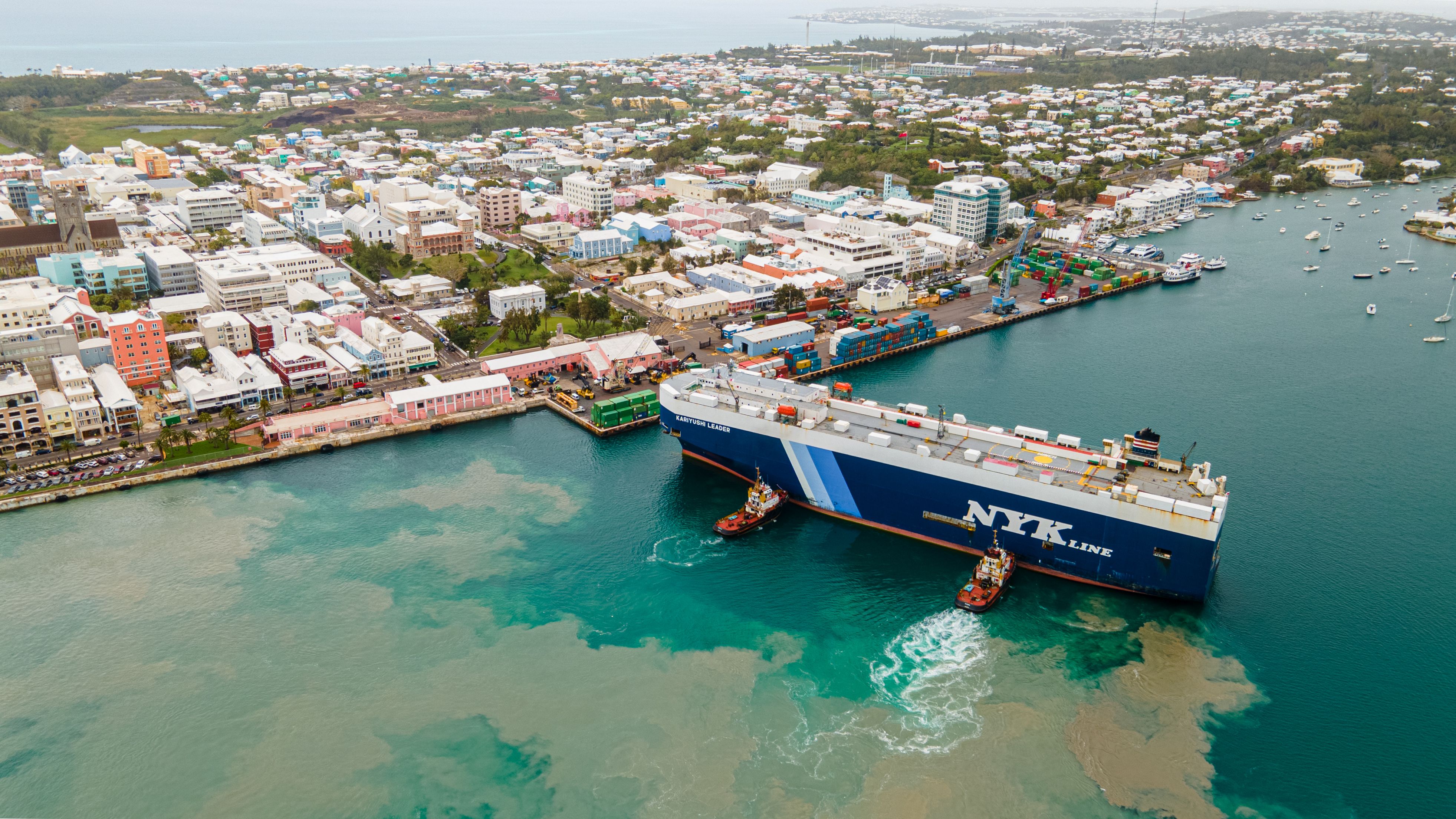
A development model built for the wrong scale
Small states are often asked to pursue development using institutions and economic strategies designed with much larger countries in mind. Those models assume substantial domestic markets, deep labour pools, extensive public administrations and enough fiscal scale to spread the cost of infrastructure and specialized expertise across millions of people. Many island economies operate under fundamentally different conditions. The discussion that follows draws principally on Caribbean evidence; its wider relevance to other small states should be assessed against their particular circumstances.
This does not mean that small states should accept weaker institutions or lower ambitions. It means that development policy must distinguish between what a country needs to control nationally and what it can achieve more effectively through regional cooperation, specialized partnerships or shared systems.
The central question is not how an island can become a miniature version of a large economy. It is how limited scale can be converted into durable economic and institutional capability.
Why scale changes the problem
A small domestic market limits the number of firms that can operate efficiently. A narrow labour pool can make specialized skills difficult to recruit and retain. Governments must still provide regulation, public finance, education, infrastructure planning and emergency response, even when their populations and tax bases are relatively small.
These pressures interact. Weak project preparation can delay investment; high financing costs can limit infrastructure upgrades; gaps in statistical capacity can make it harder to evaluate whether public programmes work. A problem in one critical institution can affect a substantial part of the national system.
Evidence assembled in Caribbean Development Dynamics 2026, published by the OECD Development Centre and the Inter-American Development Bank, illustrates why the distinction matters. The report describes investment, productivity, finance, resilience and institutional capacity as connected development challenges. It also cautions that high investment levels alone do not guarantee transformation: what investment produces matters as much as how much is spent. The report estimates potential GDP per capita growth of 1.4% in 2025 and central government debt averaging 68.6% of GDP in 2024 across the report’s regional coverage. Such regional aggregates should not be mistaken for the experience of every island (OECD/IDB, 2026).
Investment must build lasting capability
For a small state, the value of an investment should be measured beyond the completion of a project. Does a new port improve reliable market access? Does a digital system strengthen public administration? Does education investment deepen skills that local firms and institutions can actually use? Does an energy project reduce exposure to future shocks?
Reconstruction, externally financed projects and short-lived activity may raise investment totals without creating an equivalent increase in long-term productive capacity. Development strategy therefore needs to focus on conversion: turning scarce capital, technical assistance and public spending into systems that remain useful after the initial expenditure. The report records total investment averaging 28% of GDP in 2023. The figure is a reminder that a relatively high investment ratio does not by itself demonstrate that new capacity is being created (OECD/IDB, 2026).
This also calls for selective specialization. Few small economies can sustain the same breadth of industries as large countries. They can, however, strengthen areas where they possess real advantages while reducing dependence on any single market, supplier, financing source or infrastructure connection.
For small economies, international openness is unavoidable, but openness alone does not guarantee development. Trade, tourism, investment and external partnerships should also be assessed by what they strengthen locally: skills, institutions, infrastructure, productive firms and the ability to adapt when external conditions change. The objective is not self-sufficiency, but external relationships that expand national choices rather than narrow them.
Resilience is part of economic design
For islands exposed to hurricanes, flooding and other climate hazards, resilience cannot be treated as a separate environmental programme. A major disaster can damage essential infrastructure, disrupt firms and households, redirect budgets and interrupt investment plans at the same time. The OECD/IDB report records 357 climate-related extreme-weather events in the Caribbean during 1980–2024 and average annual climate-related damage of approximately 2.13% of GDP during 1980–2020. These regional figures show the magnitude of the challenge, not a uniform exposure for each jurisdiction (OECD/IDB, 2026).
An apparently inexpensive asset may be costly if it fails repeatedly. A lean public institution may prove fragile if the departure of a few specialists leaves no operational backup. Resilience must therefore inform infrastructure standards, public finance, emergency systems, workforce planning and the continuity of essential services.
The objective is not to eliminate exposure, which is often impossible, but to prevent repeated recovery from consuming the resources needed for long-term development.
What should remain national and what can be shared?
Small states cannot outsource their public legitimacy, strategic direction or accountability. They need capable national institutions to make decisions, implement policy, regulate markets and safeguard the public interest. But maintaining responsibility for a function does not always require duplicating every technical capability inside national borders.
Regional or shared arrangements can potentially help with project preparation, specialized training, statistical systems, climate analysis, procurement expertise and development finance. Such arrangements can widen access to skills and reduce the costs of fragmentation. One concrete example is the ONE Caribbean Project Preparation Coordination Mechanism, reported to have assessed more than 30 projects for support during its first nine months of operation. Shared project-preparation expertise may help translate investment priorities into financeable proposals (OECD/IDB, 2026).
Cooperation is not automatically effective. Shared institutions need clear mandates, reliable financing, implementation capacity and accountability. A regional agreement that does not deliver usable services is not a substitute for national capability. The test is whether cooperation produces results that individual jurisdictions would struggle to achieve alone.
A different model, not a lesser ambition
The analysis underlying this article rejects two extremes. The first is scale denial: treating the difficulties of small states as though they arise only from poor execution of standard policies. The second is scale fatalism: assuming that smallness makes strong institutions and productive economies unattainable.
Instead, each jurisdiction can ask four practical questions: Which capabilities must remain strong at home? Which functions can be shared without surrendering control? Where is specialization economically credible? And how can international relationships widen options rather than create new vulnerabilities?
The answers will vary among tourism-oriented islands, resource-producing economies and more diversified service centres. There is no single blueprint for all small states. There is, however, a common discipline: design around actual scale, exposure and institutional capacity.
Successful small-state development may therefore be deliberately interdependent—nationally anchored, regionally supported and internationally connected. The aim is not to do everything independently. It is to retain the ability to choose, adapt and deliver.
Smallness should shape the design of development, not become an excuse for weak outcomes.
Reference
OECD/IDB. (2026). Caribbean development dynamics 2026: Investing in sustainable and resilient development. OECD Publishing. https://doi.org/10.1787/5c92507d-en