
Lanzarote, Biosphere Reserve: More Than Three Decades Between Protecting the Territory and Tourist Pressure
November 3rd marks the celebration of International Day of Biosphere Reserves, a date that takes on special significance for Lanzarote. Although the island obtained this recognition from UNESCO on October 7, 1993, the international commemoration offers an opportunity to recall that event and examine how the territorial and economic model that helped justify it has evolved since then.
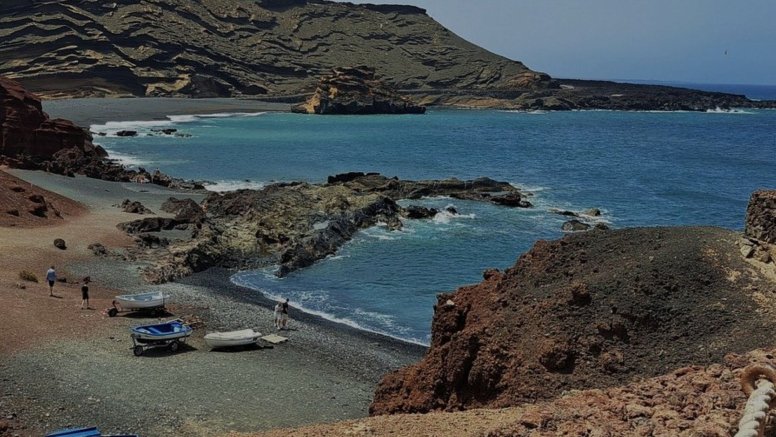
The incorporation of Lanzarote into the World Network of Biosphere Reserves, through the Man and the Biosphere (MaB) Programme, represented a recognition of a territory where nature and human activity had maintained a unique relationship for generations. The volcanic landscapes, traditional agricultural systems, popular architecture, and the inhabitants' ability to adapt to an arid environment formed an identity that transcended its tourist appeal.
The declaration did not aim to turn the island into a space separate from economic activity, but rather to recognize that the conservation of its natural and cultural values could coexist with the development of a modern society. More than three decades later, that aspiration continues to be one of Lanzarote's greatest challenges.
The path to the 1993 declaration
The international recognition was the result of an institutional and social process that began to take shape in the early nineties. On April 26, 1992, the Plenary of the Cabildo de Lanzarote agreed to initiate the procedures to request the island's declaration as a Biosphere Reserve. Subsequently, on November 6 of that same year, the Government of the Canary Islands adopted the agreement to promote the procedure.
Finally, on October 7, 1993, the International Coordinating Council of UNESCO's Man and the Biosphere Programme approved the incorporation of Lanzarote into the World Network of Biosphere Reserves. The distinction recognized both the richness of its natural spaces and the relationship that its inhabitants had built with the territory through their economic activities and traditional ways of life.
That process coincided with a growing concern about the consequences of tourist and urban expansion. In that context, the figure of César Manrique acquired fundamental prominence. The Lanzarotean artist had spent years defending a development model respectful of the landscape, traditional architecture, and the scale of population centers, against interventions he considered incompatible with the island's identity.
His discourse placed the protection of the territory at the center of public debate and questioned the reproduction of tourist models alien to Lanzarote's characteristics. For Manrique, the island's main attraction lay precisely in what made it different: its volcanoes, its agricultural spaces, its villages, and the relationship between human constructions and the natural environment.
Tourism transformed the economy and the landscape
To understand the significance of that declaration, it is necessary to go back to the previous decades, when Lanzarote began to experience a profound economic and social transformation. For generations, agriculture and fishing had constituted some of the main pillars of the island's economy, conditioned by water scarcity, the aridity of the territory, and communication difficulties.
From the 1960s onwards, tourism began to change that scenario. The arrival of visitors, the construction of accommodation establishments, and the expansion of infrastructure opened up new job opportunities and favored the island's modernization. Tourist activity gained prominence until it became the main economic engine.
Puerto del Carmen, Costa Teguise, and, later, Playa Blanca consolidated as reference destinations. The expansion of these centers modified land use and accelerated changes in the productive structure, employment, and ways of life of the population.
The transformation generated prosperity and new economic possibilities, but it also introduced tensions related to water consumption, land occupation, mobility, waste, and pressure on certain natural spaces.
The UNESCO declaration came at a decisive moment, when the island had to face the consequences of an expansion that was beginning to raise questions about the limits of growth. The issue was no longer solely about attracting visitors, but about determining what development a territory with scarce natural resources and a landscape that constituted one of its main assets could sustain.
César Manrique and a defense of the landscape that marked an era
The figure of César Manrique is essential to understanding the historical and cultural significance of the Biosphere Reserve. His artistic thinking and his commitment to protecting the environment helped to project an image of Lanzarote far removed from conventional tourist models.
Manrique argued that any intervention should be integrated into nature and respect the characteristics of each place. His work demonstrated that it was possible to create cultural and tourist spaces without hiding the landscape or renouncing the island's architectural identity.
Jameos del Agua, Mirador del Río, and Jardín de Cactus are some of the most representative examples of this concept. In these spaces, human intervention establishes a dialogue with volcanic forms and natural elements, making the territory itself the protagonist.
His influence transcended the artistic and architectural sphere. He helped to position the defense of the landscape as a collective issue and to consolidate an international image of Lanzarote linked to nature, culture, and the uniqueness of its heritage.
However, his legacy cannot be reduced to a promotional image. His thinking posed a question that remains relevant: how far can Lanzarote grow without compromising what makes it different?
More than thirty years later, the limits of growth
The 1993 declaration did not end the tensions between conservation and development. Nor did it guarantee that all decisions regarding the territory would be based on sustainability criteria. The status of Biosphere Reserve requires permanent commitments and policies capable of translating its principles into concrete actions.
Demographic evolution allows us to gauge the current challenges. According to the report Lanzarote en Cifras 2025, published by the Cabildo's Data Center in April 2026, the island reached 166,878 resident inhabitants, of whom 24.6% were foreign nationals.
To this population is added the daily presence of visitors. An estimate from the Data Center placed the average human pressure on the territory at 249,095 people during 2025, the result of adding residents and an average of 82,217 tourists present each day. These are not registered inhabitants, but an approximation of the people who are on the island daily, an indicator that allows us to gauge the needs for supply, mobility, infrastructure, and services.
The tourism indicators for 2026 also reflect the economic strength of the sector. Between January and July, 2,034,207 tourists arrived in Lanzarote, compared to 2,019,794 in the same period of 2025, representing an increase of 0.7%. During those seven months, hotel and apartment revenues reached 607.1 million euros, 6.71% more than in the previous year.
Daily tourist spending also increased, standing at 181.90 euros per person during the second quarter of 2026, compared to 154.56 euros recorded in the same period of the previous year. This trend shows that revenue growth does not depend exclusively on the increase in arrivals, but it also requires an examination of how profits are distributed and what effects this activity has on the territory and the resident population.
Water, a strategic resource and one of the major concerns
Water availability is another of the main constraints on the island's future. Lanzarote depends almost entirely on desalination to guarantee supply, a circumstance that makes energy production and the operation of facilities essential elements for economic activity and daily life.
During 2025, 31,836,504 cubic meters of drinking water were produced in the Lanzarote III, Lanzarote IV, Lanzarote V, and Janubio facilities, according to data from the water operator. However, the service balance shows a significant difference between the volume produced and the volume billed. According to statistics from the Cabildo's Data Center, unbilled water represented 55.4% of production, equivalent to approximately 17.6 million cubic meters.
This indicator highlights one of the structural problems of the integrated water cycle in Lanzarote. However, the unbilled volume should not be entirely identified with physical leaks, as it may also include unregistered consumption and other differences between production and billing.
The system's vulnerability became particularly evident on October 3, 2026, when an energy blackout caused the desalination plants to shut down and affected the supply in various parts of Lanzarote and La Graciosa. The progressive recovery of the facilities once again highlighted the dependence on a system that requires guarantees of production, storage, distribution, and electricity supply.
On an island with very limited natural water resources, water planning cannot be separated from decisions about population growth, tourism activity, and economic expansion. Ensuring supply requires improving infrastructure, reducing real losses, and adjusting consumption needs to the effective capacity of the territory.