
Pacific Island ministers and regional representatives have advanced discussions on a roadmap to transition away from fossil fuels, during Pre-COP31 meetings in Fiji.
Developed in partnership with the Beyond Oil & Gas Alliance (BOGA), the initiative centres on a regional vision for 100% renewable energy. It aims to reduce fossil fuel dependence while strengthening economic resilience and energy security across vulnerable island economies.
The discussions follow the establishment of a Pacific Renewable Energy Commissioner at the 55th Pacific Islands Forum Leaders Meeting in August. That decision created an additional mechanism for coordinating regional energy priorities.
Energy Security Drives Regional Transition Plans
Pacific Island economies face considerable exposure to imported fossil fuels, leaving energy systems vulnerable to international price fluctuations and supply disruptions.
For governments already confronting rising climate adaptation costs, reducing fuel dependence offers both economic and environmental benefits.
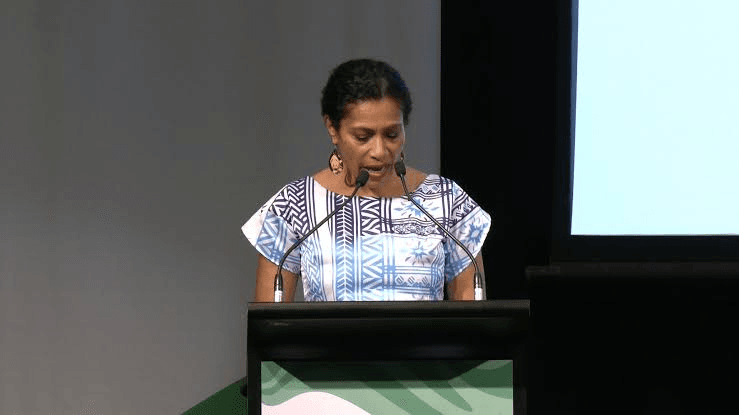
Tina Stege, COP31 Pacific envoy and climate envoy for the Marshall Islands, called for accelerated action.
“With climate impacts accelerating, instability rising, economies faltering and the fearsome reality of an overshoot to the 1.5C temperature limit approaching, it’s high time to transition away from fossil fuels,” Stege said.
“The Pacific needs to end its dependency on fossil fuels for our own economic and energy security. We need every region of the globe to follow us in developing a roadmap to a cheaper, cleaner, healthier, secure low-carbon energy future, so we can secure our environmental safety too.”
The proposed roadmap would provide a regional framework for translating political commitments into practical energy transition strategies.
However, implementation will require coordinated investment, stronger electricity infrastructure and financing mechanisms suited to smaller island economies.
Pacific Leadership Builds on Global Climate Commitments
The initiative extends a longstanding regional campaign for stronger international action on fossil fuels.
In 2023, Pacific leaders advanced the Port Vila agreement, calling for a global phase-out of coal, oil and gas production.
Pacific nations also played an influential role in securing the COP28 agreement to transition away from fossil fuels in energy systems.
Lynda Tabuya, Fiji’s Minister for Environment and Climate Change, highlighted the region’s continued advocacy.
“The Pacific has, for a long time, spearheaded the transition away from fossil fuels,” Tabuya said.
“From the call in Port Vila three years ago for a fossil-fuel free Pacific, to this year’s Pre-COP hosted in Fiji and Tuvalu, Pacific leaders have advocated tirelessly for a global energy transition. Keeping 1.5 alive is an existential need for us. I’m proud and humbled that Fiji is hosting this event, during which the process for a new, regional roadmap will be discussed. I look forward to the continued results of the Pacific Community’s work.”
The regional process could provide a model for other economies seeking to align energy security with commitments under the Paris Agreement.
Development Banks Support Investment and Just Transition Planning
Financial and institutional support will be central to converting the roadmap into viable projects.
BOGA and the NDC Partnership have announced support for oil and gas-dependent economies developing transition roadmaps.
Meanwhile, the Asian Development Bank (ADB) has established a Just Transition Support Platform for the Pacific.
The platform will help identify investment opportunities and develop feasible transition pathways. Its priorities include energy security, economic development and resilience.
ADB also intends to address the distributional consequences of energy transitions, particularly for vulnerable communities.
“By strengthening the evidence base for policy dialogue and investment planning, we can help ensure that the benefits of transition are widely shared, while potential impacts on vulnerable groups are managed,” said Yevgeniy Zhukov, Director General of ADB’s Climate Change and Sustainable Development Department.