
The Green Overseas Programme Identifies 5 Innovative Mechanisms to Address Climate-Related Financing Needs
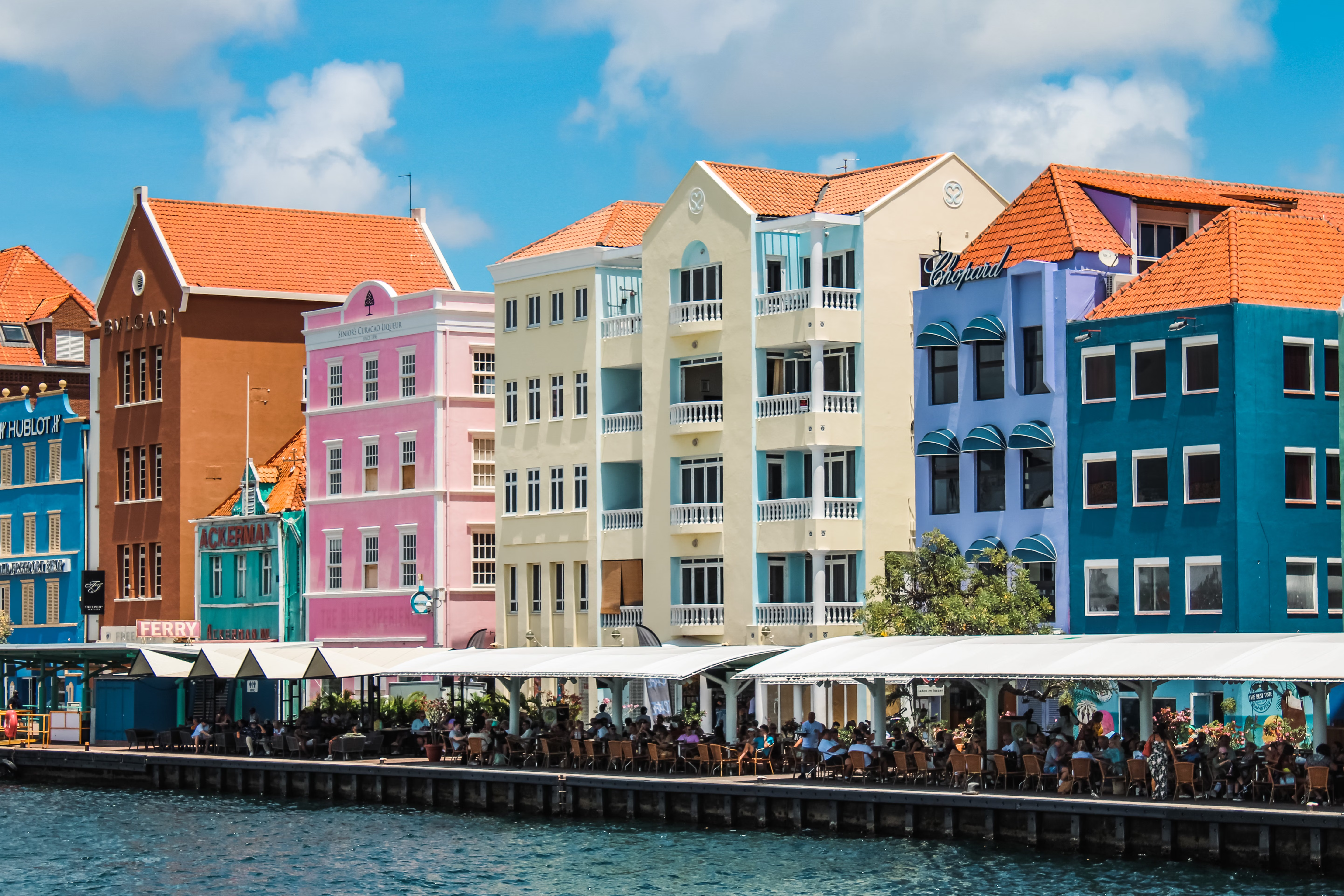
On the occasion of its closing and knowledge-sharing forum, the Green Overseas Programme (GO) presents the findings of its study, conducted by ODI Global, on innovative financial solutions to address the climate financing needs of the European Union Overseas Countries and Territories (OCTs) and UK Overseas Territories (OTs). These territories face particular challenges in accessing finance, in addition to being vulnerable to climate change. Of the 18 mechanisms analysed in the study, five stand out as having the greatest potential for OCTs/OTs in terms of alignment with their strategic priorities, implementation capacity and scalability.
Five complementary mechanisms to meet the needs of financing private investors
The study, Innovative Climate Finance Solutions for the OCTs/OTs2, identifies five priority mechanisms that can be used by public authorities in OCTs/OTs with focus on leveraging private finance for climate resiliency purposes. For investors, these five mechanisms offer different profiles in terms of returns, risks and investment horizons. Their main value lies in their complementarity, as there is no one-size-fits-all solution for OCTs/OTs. Some mechanisms enable capital to be raised immediately, while others reduce the risks borne by investors or generate recurring revenues capable of financing projects over the long term.
Green and blue bonds are the most established mechanism in financial markets. In 2025, global green bond issuance reached USD 650 billion, accounting for 62% of the thematic bond market. The capital raised is earmarked for specific projects, such as renewable energy, energy efficiency, water management and coastal infrastructure. In the Cayman Islands, for example, Caribbean Utilities Company raised USD 50 million in 2024 to finance renewable energy, energy efficiency and climate adaptation projects through the issuance of a green bond. For investors, the appeal lies in the traceability of funds, the publication of impact indicators and the existence of recognised international standards. However, this mechanism remains limited to issuers with sufficient repayment capacity, a credible credit rating and a project portfolio large enough to absorb issuance costs.
Carbon markets, meanwhile, offer another opportunity by turning environmental outcomes into a source of revenue. Collectively, the territories covered by the Green Overseas Programme are home to major carbon-storing ecosystems, ranging from forests and peatlands to mangroves and seagrass meadows. The study identifies, for example, approximately 4,500 km² of peatlands in the Falkland Islands, as well as 930 km² of seagrass meadows in New Caledonia and 800 km² in the Turks and Caicos Islands. Their conservation or restoration could generate carbon credits purchased by companies, while also protecting biodiversity and coastlines. For buyers and investors, the attractiveness of these credits depends directly on their quality. Projects must be supported by robust data, independent certification, evidence and reporting that the climate benefits would not have occurred without the financing.
When the protection of an ecosystem does not immediately generate commercial revenues, conservation trust funds can provide long-term financing. On Ascension Island, a GBP 2 million philanthropic endowment enabled the creation of the AIMPACT fund. The capital is invested, and the returns generated are used to finance environmental projects and local activities. In Niue, in the South Pacific, companies, foundations and individuals can contribute NZD 250 to support the conservation of one square kilometre of ocean for twenty years. For financing providers, these funds offer a dedicated structure, clearly defined governance and greater transparency regarding the use of resources. For territories, they make it possible to sustain activities beyond the duration of an individual grant.
For projects whose risk levels remain too high to attract private capital on their own, blended finance has been identified as a suitable solution. It can be used across diverse areas such as renewable energy and upgrades to local climate resilient infrastructure (e.g. water treatment and storage facilities, roads, ports, etc). For example, a grant can finance preliminary studies, a concessional loan can reduce financing costs, while a guarantee or first loss mechanism can partially protect investors in the event of difficulties. This distribution of risk can make projects financially viable when they would not qualify under other financing mechanisms. For investors, blended finance improves the risk-return profile while providing access to climate projects that would otherwise fail to meet their expected profitability thresholds. In the Caribbean there are a small but growing number of start-up initiatives seeking to turn challenge into opportunity by converting sargassum biomass (brown algae) into commercially viable products, with EU-blended finance support.
Finally, environmental levies can generate a more predictable source of local revenue. Aruba, for example, applies a USD 20 contribution per tourist. These revenues can finance infrastructure maintenance, sustainability purposes, or contribute to a conservation fund. Although they do not constitute an investment product in themselves, they can provide reassurance to investors by establishing a dedicated and sustainable revenue stream while reducing dependence on one-off grants.