
Malta’s Social Climate Fund Plan Launched with Investment of Around €60.6 Million
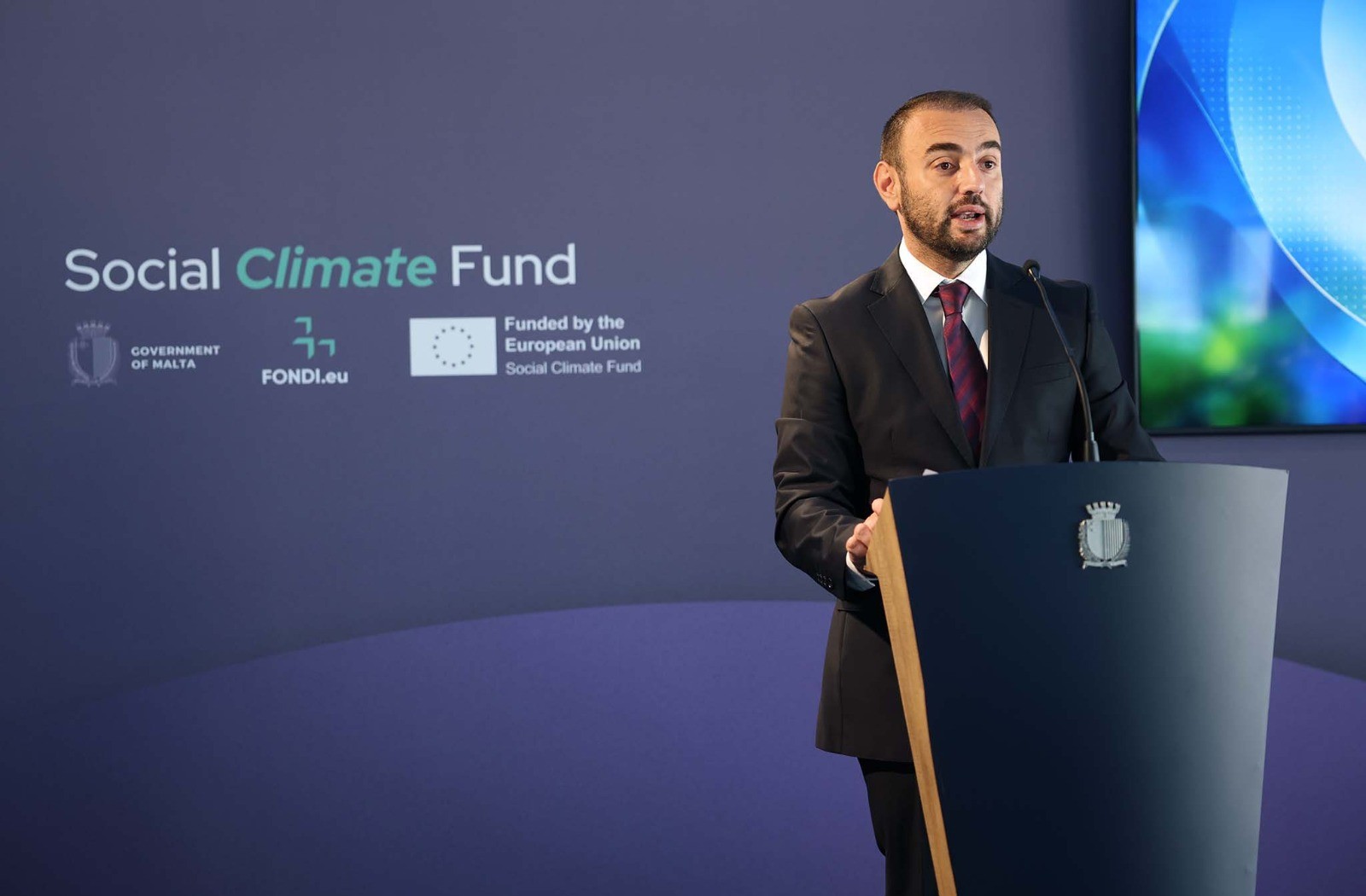
Around 235 apartments will be upgraded to make them better protected from heat and cold, while older people and people with disabilities who cannot use conventional transport will benefit from more accessible community transport.
These are among the measures included in Malta’s Social Climate Fund Plan, with an investment of around €60.6 million until 2032. The plan will also help vulnerable micro-enterprises purchase electric vehicles for their work.
Homes that are better protected from the heat in summer and the cold in winter. More accessible transport for those who have difficulty getting out to carry out their daily errands. And support for very small businesses to purchase electric vehicles they need for their work. These are the three main interventions under Malta’s Social Climate Fund Plan, aimed at vulnerable families, individuals and micro-enterprises. Director-General of the European Commission’s Directorate-General for Employment, Social Affairs and Inclusion Mario Nava said that, in the housing sector, works are planned for around 235 apartments.
"And the renovation we are doing is the one very much linked to the climate effect. So heating, cooling, solar panels, insulations, double glazing and so on and on. And yesterday I visited one in Żabbar."
Permanent Secretary Jonathan Vassallo explained that the support is intended to make a difference both to the environment in which these people live and to the way they travel for their daily needs, "So here we will help vulnerable people have a better environment at home, mitigating the impact of climate change, while also supporting vulnerable people with mobility difficulties so that they can carry out their daily errands."
In the transport sector, the plan provides for investment to enable local councils to offer more accessible transport. Nava specifically mentioned older people and people with disabilities: "And the other is for local councils to have more accessible local transport for those people Think of the older. Think of the people with disability who cannot use conventional transport."
Part of the support will go to vulnerable micro-enterprises to replace the vehicles they use for work with electric ones. Mr Vassallo said that for these businesses, this could be a cost they would not be able to afford without support.